

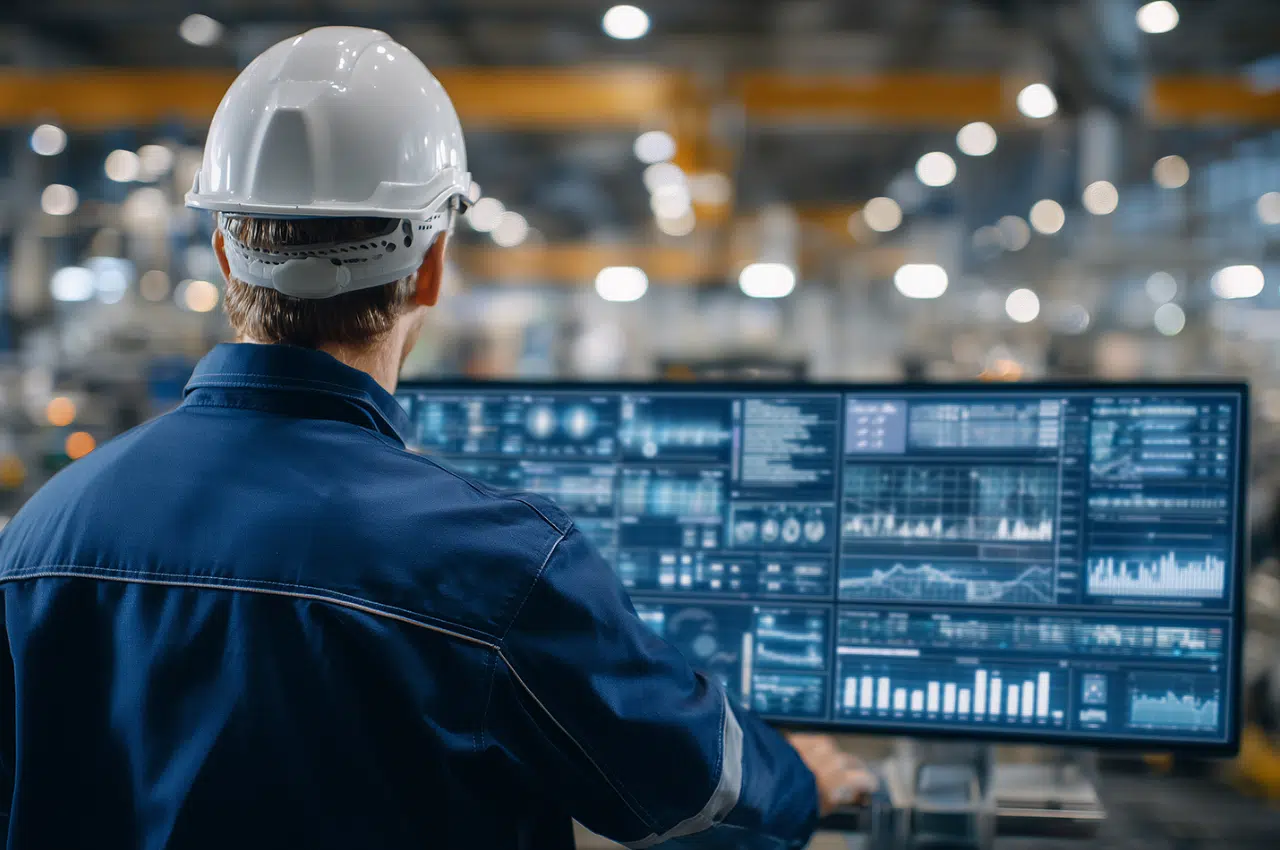
Unlike traditional automation which are predictable, rule-based and bounded, agentic systems behave more like operational teammates.
Industrial automation has always progressed in waves. First came programmable logic, then distributed control, then digitalization and most recently AI-driven optimization. Each wave improved consistency, throughput and safety. But a new shift is underway: one that blurs the boundary between automated machines and autonomous decision-making systems. Agentic AI, a new class of AI capable of reasoning, planning and acting in dynamic environments, is beginning to influence how factories operate, how supply chains adapt and how engineers design future-ready systems.
Unlike traditional automation which are predictable, rule-based and bounded, agentic systems behave more like operational teammates. They interpret goals (“increase uptime,” “reduce scrap,” “optimize throughput”), evaluate constraints and coordinate actions across systems. For manufacturers facing volatility in labor, demand and supply chains, this represents an entirely new operational paradigm.
From deterministic automation to adaptive autonomy
For decades, automation has been built around determinism: sensors feed PLCs, PLCs execute logic, actuators respond. Any deviation from the expected path typically escalates to alarms, overrides, or human intervention.
The system works until conditions change faster than the rules can adapt. Agentic AI introduces adaptive autonomy. These systems can analyze operational data in real time, contextualize failures, simulate alternatives and take corrective action within defined safety boundaries. A conventional automation script reacts; an agent evaluates. It doesn’t just flag an anomaly it explores root causes, tests potential responses and initiates the one that best aligns with operational objectives.
This capability is particularly important in environments where complexity has outpaced human monitoring capacity: multi-line robotic operations, energy-intensive process plants and global distribution networks. As variability increases, autonomy becomes not just efficient but necessary.
Why agentic AI changes what industrial teams build next
As manufacturers modernize automation, a subtle shift in priorities is emerging. Previously, investment centered on reducing downtime, improving output, or integrating new equipment. But agentic AI demands different foundations. It requires clarity of data, interoperability of systems, transparent control logic and the ability to observe not just measure what is happening across the plant.
The organizations seeing early success have realized that the projects most valuable for AI are not always the most obvious. They are the ones that make the environment machine interpretable. A plant with fragmented data historians, isolated SCADA layers, or inconsistent naming conventions will struggle to deploy autonomous agents regardless of model strength. Conversely, a plant with centralized insight, unified asset models and event-driven architecture becomes fertile ground for agentic decision-making.
This shift redefines modernization: the goal isn’t just digital transformation; it’s autonomy readiness.
How autonomy manages itself: Observability, context and coordination
Three capabilities determine whether a factory is prepared for agentic operations, and they operate like the pillars of autonomous behavior.
Observability is no longer just logging or dashboards; it is the ability for AI systems to explain why they took an action. An agent adjusting spindle speed or rebalancing a production schedule must provide traceable reasoning. Without this, trust collapses, adoption stalls and compliance risks increase.
Context is the agent’s operational intelligence: the quality of equipment definitions, maintenance history, process tolerances, safety rules and production constraints. Many AI initiatives fail not because the models are weak, but because operational knowledge lives in PDFs, tribal memory, or outdated spreadsheets.
Coordination refers to the digital connective tissue across machines, PLCs, MES, SCADA and ERP. Agents do not operate in isolation; they orchestrate. The more consistent the interfaces and metadata, the more intelligently agents can navigate workflows and make safe decisions.
Factories that invest in these foundations find that autonomy becomes not a moonshot but a natural progression of their existing automation maturity.
Why governance matters more in industrial settings
Industrial environments have one non-negotiable requirement: safety. Autonomy cannot be deployed recklessly. Leading manufacturers are adopting tiered autonomy models like autonomous vehicle frameworks, progressing from monitoring, to suggesting actions, to supervised execution, to fully autonomous control within strict boundaries.
This staged approach builds confidence with operators, technicians and leadership. It also aligns with industry standards and regulatory expectations. Autonomy in a plant is not “hands off: it is “hands on the loop,” where humans set the goals, rules and boundaries, and agents operate within them.
In this respect, agentic AI does not weaken governance, it strengthens it by requiring systems to be more transparent, more explainable and more auditable than traditional automation ever demanded.
The human role: From operators to system designers
Despite fears of automation replacing people, agentic systems tend to elevate human roles. When routine troubleshooting becomes autonomous, engineers shift their focus to specifying constraints, designing safety logic, mapping interoperability and refining optimization goals. Operators move from reactive tasks to proactive supervision of autonomous workflows.
This partnership between humans and AI where each enhances the other’s strengths is emerging as the defining characteristic of AI-native factories. The organizations that excel will be those that treat autonomy not as a technology deployment but as a workforce transformation.
A glimpse at the future AI-native plant
If current progress continues, the next generation of industrial operations may function like adaptive ecosystems:
- Production schedules that reconfigure themselves based on demand and equipment conditions
- Autonomous agents tuning process parameters in real time to balance speed, yield and energy use
- Predictive agents detecting drift in machine behavior before humans notice a trend
- Logistics agents rerouting materials dynamically when supply disruptions occur
- Quality systems that identify pattern deviations invisible to conventional SPC
Humans will remain in control, not through constant intervention, but through architecture, policy and strategic oversight.
Becoming autonomy-ready
For industrial leaders evaluating next steps, the message is simple: the path to agentic AI doesn’t start with AI: it starts with the systems that make autonomy possible. The winners will be those who build clear data, modular architecture, transparent governance and skilled human oversight into their operations. Autonomy is coming, but it will reward the prepared.
Agentic AI doesn’t just promise faster processes; it promises smarter, safer and more adaptive operations. For manufacturers navigating uncertainty, this shift may prove to be the most transformative wave of automation yet.
Resource: Automation